Our Story
Why I Built CPRally
CPRally began with a practical problem: I needed an economical way to organize a gimmick rally for my local SCCA region without relying on a large group of volunteers.

Born Out of Necessity
As I started planning an upcoming poker run, I began by researching online poker run websites and applications, and was very quickly disappointed. Everyone either wanted a lot of money, the app or website looked old or unused/abandoned, or charged participants. I didn't want to chance signing up for an outdated or abandoned platform, one that I couldn't control its entrants, have to pay $100 to use, or require my participants an additional fee. I became disappointed and thought an online solution was out of the question.
So, I turned to ChatGPT and asked how I might build a secure physical box that could be opened using NFC-enabled devices. Sounds crazy but sometimes out of the box thinking can get to a cool idea! That idea quickly evolved into something more useful: instead of putting technology inside a box, why not put the entire experience online?
A traditional mobile app seemed like the obvious answer, but maintaining separate applications for Android and iPhone would create twice the work for what was, at its core, fairly straightforward functionality. Modern browsers already provide access to GPS, responsive interfaces, and many of the capabilities we would need.
So the idea for a web-based rally platform was born.
Could AI Build It?
I had already spent more than a year experimenting with AI-assisted software development and had become convinced of its potential. I eventually began testing Devin, an autonomous software-development agent, first with small projects and then with increasingly complex assignments.
With my club’s poker run less than four months away, I decided to put that technology to a much larger test:
Could I use AI to help design and build the platform I needed?
Before anything was developed, I established several nonnegotiable principles.
The Principles that Shaped CPRally
-
It had to be genuinely affordable
Not “free until the trial expires.” Not “free until enough people use it.” As close to free as practical. CPRally needed an architecture that could begin at little or no operating cost and grow responsibly as usage increased.
-
AI had to do more than help write code
The process needed to cover much more than programming. AI would need to assist with product planning, technical architecture, user-interface design, documentation, testing, and implementation.
-
It had to be easy for everyone
Road rally participants may be comfortable solving clues and doing calculations while traveling down the road, but that does not mean they should have to fight with a complicated website at the same time. The participant experience needed to be quick, clear, and mobile-friendly.
-
It could not be built for only one club
Jeep clubs, classic-car groups, Miata and Corvette clubs, charitable organizations, boating groups, and other communities all run their events differently. CPRally needed enough flexibility to support those differences without burying organizers beneath an overwhelming number of settings.
Designing Before Developing
I gave those principles to ChatGPT and began turning the original idea into a fully defined product. Three long weeks later—although much of that time was spent learning and refining the process—I had a comprehensive product requirements specification, user-interface specifications, technical documentation, brand standards, logos, social-media assets, and hundreds of screen mockups.
It was finally time to test whether Devin could build what had been designed.
My first approach was deliberately minimal. I provided a limited amount of information, assigned a milestone, and told Devin to build it. It did not go well. The result contained numerous defects, inconsistent screens, conflicting behavior, and features that were not usable even in their most basic form.
That failure taught me one of the most important lessons of the entire project: autonomous development does not eliminate the need for clear product thinking. It makes clear product thinking even more important.
Building a Better Foundation
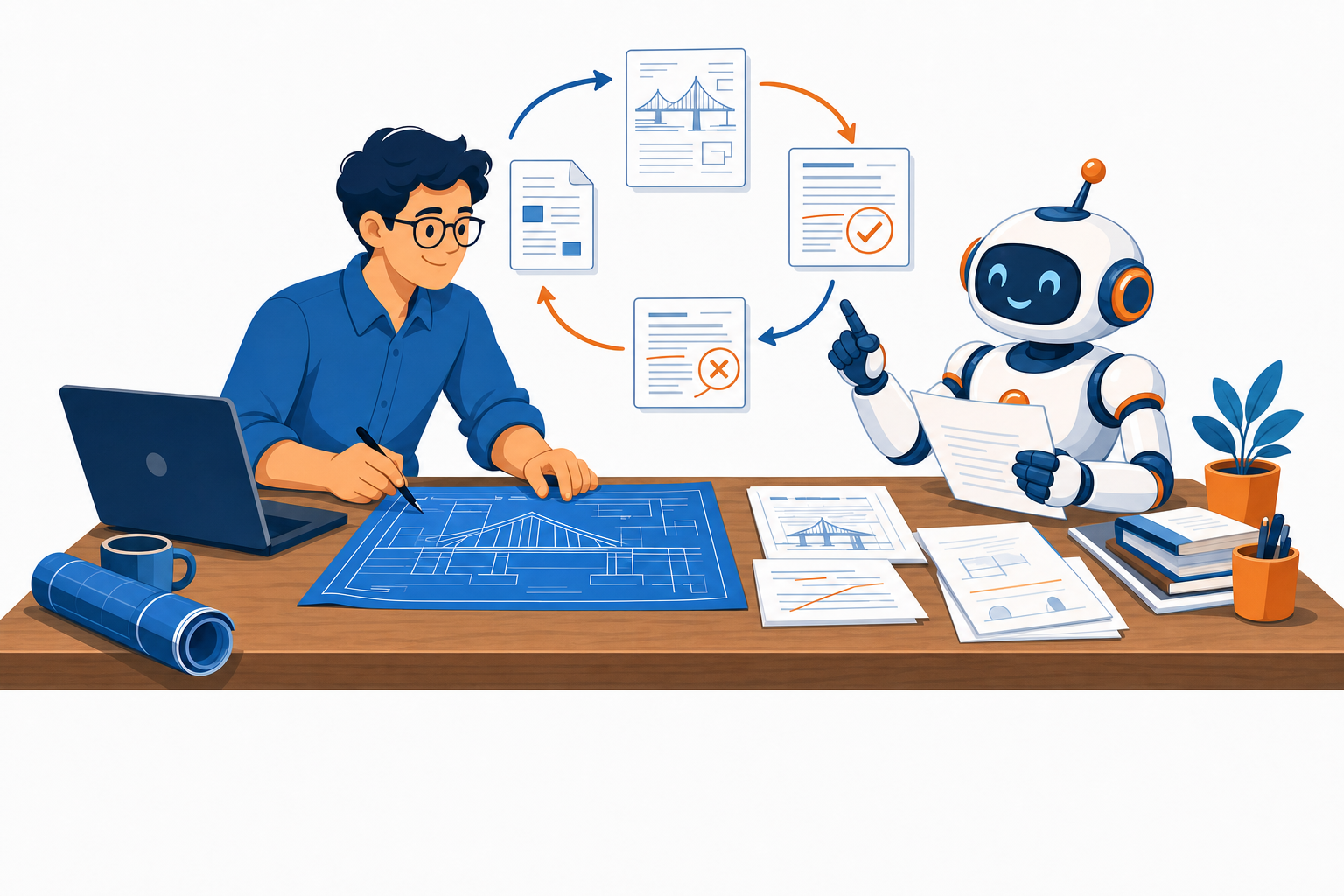
I stepped back and changed the process. Instead of immediately asking Devin to write more code, I asked it to review the documentation. Those reviews uncovered inconsistencies, missing requirements, conflicting instructions, and assumptions that had not been adequately explained.
I brought those findings back to ChatGPT, corrected and expanded the specifications, returned the updated documents to Devin, and asked for another review. Then I repeated the process.
More than a dozen review cycles later, Devin reported that the documentation contained what it needed to build the application autonomously. Development then proceeded one milestone at a time. For each milestone, I supplied the relevant screen designs, requirements, constraints, acceptance criteria, and implementation guardrails.
Devin produced thousands of lines of code to implement the major features. It provided screenshots showing the completed work and, in many cases, videos demonstrating the functionality it had built. After each milestone, I tested the results, documented defects, refined the requirements, and sent the work back for correction.
AI may have accelerated the development, but it did not remove the need for planning, judgment, testing, or accountability.
From an Idea to a Working Platform
Now, as CPRally approaches its beta release—or perhaps has already entered beta by the time you are reading this—I find myself reflecting on how quickly the original idea became a functioning platform.
Had I needed to plan the product, design every screen, write every line of code, and test every feature myself, I estimate that reaching this point would have required at least 12 to 16 weeks of full-time development. Even with a traditional AI-assisted coding tool, it would have been a substantial undertaking.
Instead, CPRally was created through a collaboration between human experience and several forms of artificial intelligence.
The original need, product direction, operational knowledge, constraints, and final decisions came from me. AI helped turn those inputs into specifications, designs, documentation, code, and working features at a pace that would otherwise have been extremely difficult to achieve.
This Is Where You Come In

Does CPRally have bugs?
Almost certainly.
I found plenty while testing each milestone, and I expect beta users will discover situations I could never reproduce by myself. CPRally supports different organizations, organizers, events, checkpoints, teams, participants, roles, and event states. There is only so much one person can test alone.
That is why the beta period matters.
Your feedback will help identify defects, improve confusing workflows, and make the platform more dependable for everyone who uses it.
The goal is to provide an accessible platform that clubs and communities can use to plan, promote, host, and operate events such as:
- Poker runs
- Scavenger hunts
- Gimmick rallies
- Treks and trail rides
- River runs
- Charity cruises
- Checkpoint challenges
- And other events built around exploration, community, and a shared destination
CPRally was born because I needed a better way to run one event.
My hope is that it becomes a better way for many organizations to run theirs.